UX Design

The user experience in focus (UX design)
Learn why the user experience is key to the success of any website or app, and what principles and methods are behind it.
What exactly is UX design?
In a nutshell: UX design (User Experience Design) focuses on designing products – such as apps, websites, or devices – in a way that makes them easy, efficient, and enjoyable to use.
For example, you buy a smartphone: you set it up and immediately know what to do. No puzzles, no searching. You like the smartphone and you can use it intuitively. That makes you happy and satisfied. That is good UX design.
Core objectives of UX design
The main goal of UX design is to create web applications that not only solve a specific problem, but do so in a way that is pleasant, efficient, and accessible for the end user. This includes:
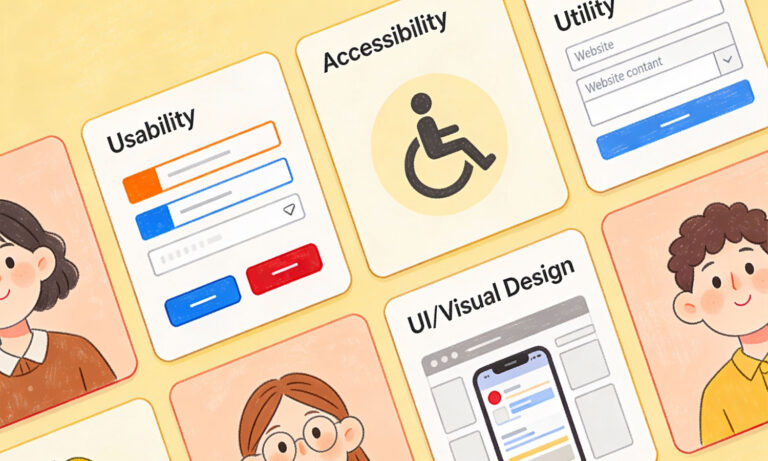
- Usability: Ensuring that the website is easy to use and that users can achieve their goals without unnecessary hurdles.
- Accessibility: Ensuring that the website is accessible to all user groups, including people with disabilities.
- Utility:
Does the app or website offer something you really need or want? Even the most beautiful website is useless if it doesn’t solve a problem. - Aesthetics & Visual Design (UI/Visual Design):
An appealing look makes the website trustworthy and pleasant to use. It is what is often referred to as UI design (User Interface Design).
Architecture of a UX design.
Interaction
Informative
Appealing
Usability
Typography
Intuitive
Content
Functionality
Good UX design is important!
Bad UX Design
You get frustrated, have to search for a long time, give up annoyed and leave the app or website.
Good UX Design
You reach your goal quickly, without much effort, and it felt good.
Good design makes your customers happy. If your website is easy to understand, users will immediately find their way around. This creates a positive feeling and builds trust. The result: more sales, satisfied customers, and a strong presence that is remembered.
The UX design process.
- Empathy: Understanding the needs, problems and goals of the target group (user research).
- Definition: Clearly define the core problem to be solved, based on the insights from the empathy phase.
- Ideation: Develop creative solutions and innovative approaches to solve the defined problem.
- Testing: Test the prototypes with real users to gather feedback and continuously improve the design.


Distinction from UI design (User Interface Design)
A common mistake is confusing UX and UI design.
- UI design deals with the user interface – i.e., the visual elements such as buttons, colors, typography, and layout. It’s about appearance and interactivity. Also known as “web design.”
- UX design, on the other hand, encompasses the entire user experience. The UI is only a part of the UX. A beautiful UI (good interface) can be part of a good UX, but if the product is confusing or illogical, the UX is bad, regardless of the appearance.
In summary, UI is how something looks and feels; UX is how it works and how it feels to use it.
There is no universal UX design
We do not use fixed templates into which your texts and images have to be squeezed. Instead, we design the appearance of your website individually according to your content. The design adapts exactly to what you have to say, so that everything fits together perfectly and looks good.
Internet without barriers: Accessibility for everyone
Accessibility is the basis for good and modern UX design. We design your site to be accessible to everyone. An internet page without barriers is easier to use, looks professional and invites everyone to discover your offer.